Tired of Getting Banned While Scraping Data? Try Residential Proxies
News08/02/2026, 18:27Modified 12/09/2026, 22:550 min read
Web scraping is quite a versatile tool. It is used by businesses and researchers to scrape data from websites. But scraping is not easy. Many websites block scrapers. They sniff out abnormal traffic and work to block your IP address. This can be frustrating.
Recommended: rotating residential proxies for scraping.
IP bans are a common problem. Your IP is banned and you cannot visit the website. Finally, some websites are very secure. They are on the lookout for repetitive requests or strange behavior.
They can also employ CAPTCHA to prevent bots from using the service. You could use residential proxies to get around this. They enable you to scrape websites without being blocked.
Residential proxies are based on actual IP addresses that have been assigned to homeowners. This will make your requests appear as though they’re originating from actual users. Using residential proxies, your scraping goes safer and faster.
Why Scraping Gets You Banned
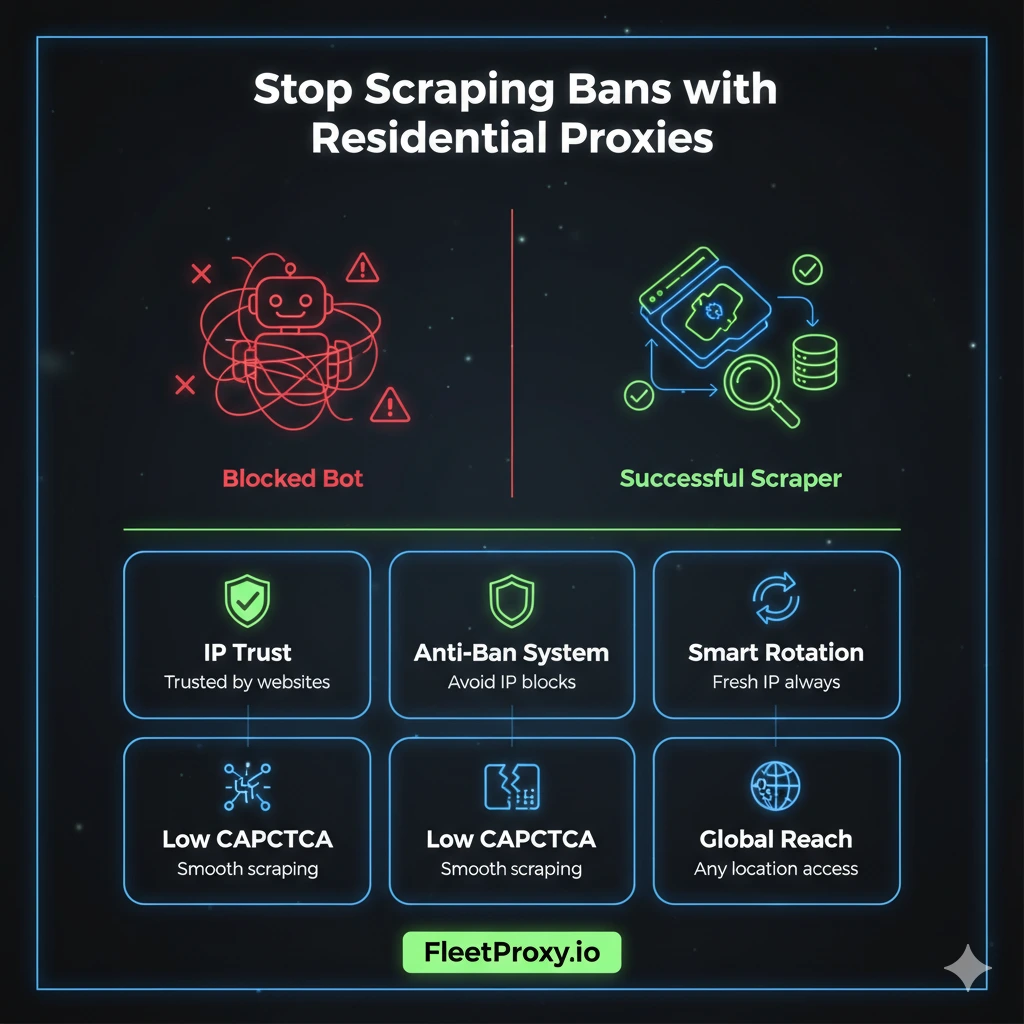
There are many different ways in which websites can identify and stop scrapers. The most typical approach is to use IP banning. A website blocks an IP if it gets too many requests from it.
Data center IPs are more easily detectable. These are IPs that many scrapers use, so websites can easily detect them.
Another common cause of blocking scrapers is rate limits. Websites assume that people will be reading slowly. Receiving a large number of requests in a short period from another server looks suspicious.
If someone shares the list with these websites, they can block the IP or limit access speed.
CAPTCHAs
CAPTCHA also stops scrapers. CAPTCHA pop-up when websites notice abnormal traffic. They are intended to trip up automated tools. Even a basic CAPTCHA can prevent a scraper from going full throttle.
Important: Test Automated CAPTCHA Solver
Data Center IP Detection
Last but not least, detection of data center IPs is rampant. Websites know the IP ranges of data centers. If your IP is a known data center, your requests are probably getting blocked. These steps make it difficult to scrape without a plan.
What Are Residential Proxies
Residential proxies are simply real IP addresses assigned to a home. These IPs are provided by Internet Service Providers (ISPs). Websites treat them as everyone else.
Residential proxies are less prone to being blocked than data center proxies. The key differentiator between residential and data center IPs is trust. Residential IPs appear to be real users. The IPs of the data center look like servers.
This difference is easily detectable by websites. IP rotation is also possible through residential proxies. This enables you to switch your IP automatically when scraping.
By rotating IPs, websites are not able to recognize that you've been requesting with the same address over and over.
How Residential Proxies Prevent Bans
IP Legitimacy
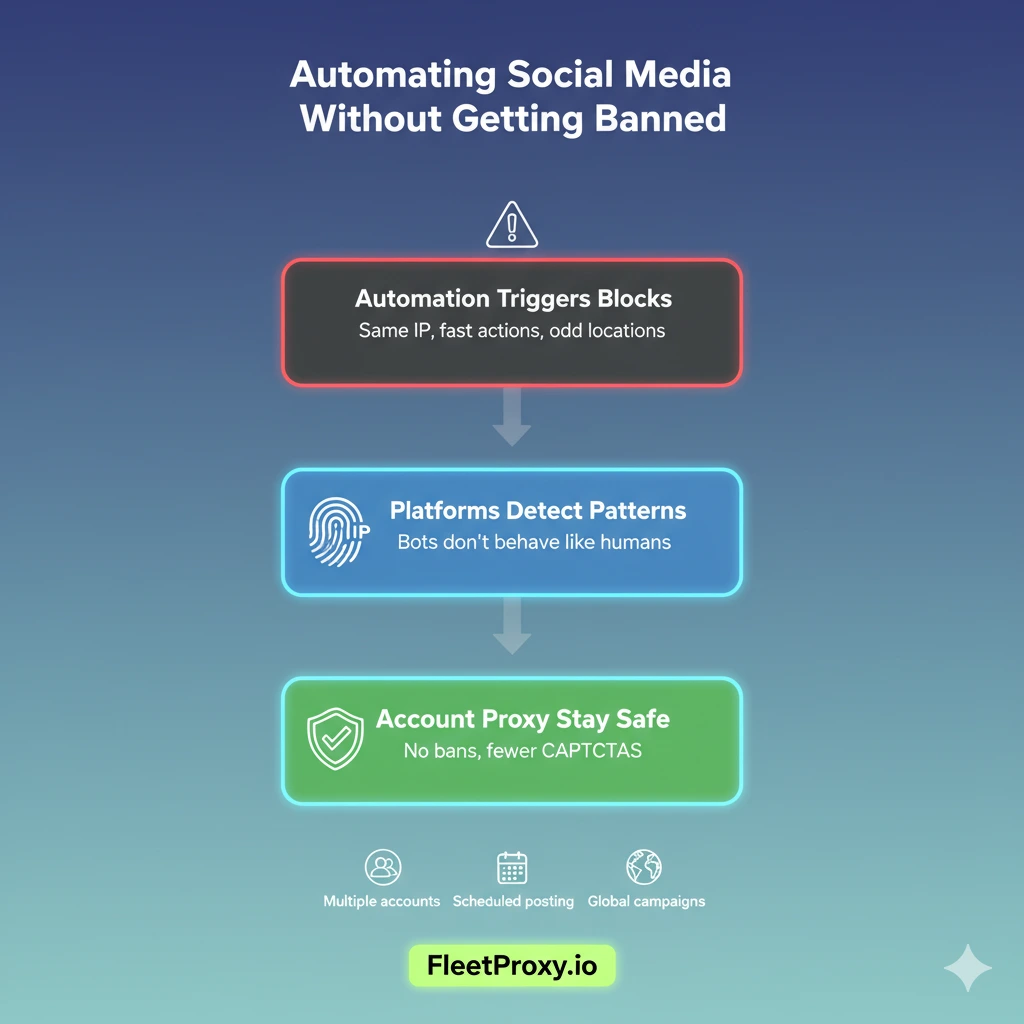
There are a few ways residential proxies help prevent bans. First, they improve IP legitimacy. Websites are more likely to trust residential IPs compared to data center ones.
Natural Browsing Behavior
Secondly, they reproduce authentic browsing activities. Your requests will look natural by using residential proxies. Websites are visited by activity that resembles what a human being does. This helps to prevent blockage.
IP Rotation
Third, residential proxies can rotate IPs on their own. If a site detects a shady IP, it's immediately exchanged by the proxy. That's what keeps your scraping session going.
Reduced CAPTCHAs
At last, residential proxies reduce the number of CAPTCHA. Because your requests appear more human-like, websites are less likely to slap you with a CAPTCHA. This makes sure that you never get stopped scraping.
Read: How to Fix Reddit Block?
Key Benefits for Web Scraping
There are a number of advantages to using residential proxies. They will improve the success rate of your scraping projects. You see more data because your IP is not banned.
They also provide access to geo-blocked content. Some sites present users in separate countries with different data. You can access from a specific location IP using residential proxies to see the content.
Residential proxies ensure stable, long-living scraping projects. No need to pause for bans or CAPTCHA. This is useful for projects on scale.
And last but not least, residential proxies make your scraping possible to scale. You can crawl many pages without having to worry about getting caught. This saves time and increases efficiency.
Conclusion
Web scraping is challenging if you don't have the right tools. IP bans, CAPTCHA, and data center detection slow down projects. Residential proxies solve these problems.
They essentially masquerade your requests as legitimate users. They use IP rotation to evade detection. Residential proxies help achieve better scraping success, support geo-location, remove speed limits, and make massive web routines more manageable.
So if you need uninterrupted data collection, residential proxies are the way to go. They make it easy to gather data without sacrificing online security.
FAQs
Q1: Can I scrape any site using residential proxies?
Ans: Yes, proxies for residential use work on most websites. Very strict websites may still require careful configuration.
Q2: Are residential proxies expensive?
Ans: They are more expensive than data center proxies. But the trade-off is worth it because they prevent bans and save time.
Q3: How many IPs do I need for scraping?
Ans: It depends on the project. Large-scale scraping requires multiple IPs with rotation. Small projects may work with fewer.

Michael Maelar
Head of Proxy Infrastructure


Michael Maelar leads proxy infrastructure at FleetProxy, where he focuses on residential and mobile IP network performance, ethical sourcing, and rotation engineering. Before joining FleetProxy in 2025, he spent six years working on web scraping infrastructure and anti-bot evasion for e-commerce data teams. He writes about proxy networks, scraping reliability, and the practical tradeoffs between provider tiers.


Ready to try FleetProxy?
Residential proxies from $2.65/GB on real IPs across 100+ countries. Instant activation with 24/7 expert support.
Get StartedReady to try FleetProxy?
Residential proxies from $2.65/GB on real IPs across 100+ countries. Instant activation with 24/7 expert support.
Get StartedMore popular posts
Tips to Use a JP Web Proxy to Browse Japanese Websites Safely.
Have you ever clicked on a link to an exciting Japanese video, a regional news article, or a unique e-commerce site, only to be met with a frustrating error message? "This content is not available in your region." This digital barrier, known as geo-blocking, is a common hurdle for international fans of Japanese culture, researchers, and expats alike.

How to Use SOCKS5 Proxy on iPhone
SOCKS5 proxy is a safe connection protocol that directs your internet traffic over another server. This server covers your actual IP address and provides a new one.
How much does an IP address cost in 2025?
The IP address cost in 2025 varies across regions. Larger blocks are cheaper per IP but costly overall, while smaller blocks offer more stability, clarity and security. No matter the option, understanding these trends helps businesses make smarter and more cost-effective decisions